
Why Physics…
and why now?

Physics is a demanding class. It combines math skills, such as on-the-fly trigonometry and systems of equations, with complex problem solving in a way that few other subjects do. In many schools, it has a reputation of being one of the most difficult classes a student will encounter.
Fewer students elect physics every year. That's exactly why the ones who are good at it stand out.
Meanwhile, more pre-health programs now require a full year of college physics, a requirement that slows students down badly if they arrive unprepared. And between two otherwise equal medical school applicants, a strong MCAT physics score or a quantitative research project is often what separates them.
Compared with a population that is increasingly satisfied with just squeaking by in physics, being willing to meet the challenges and rewards of this class head-on is an investment that keeps paying dividends throughout your education.
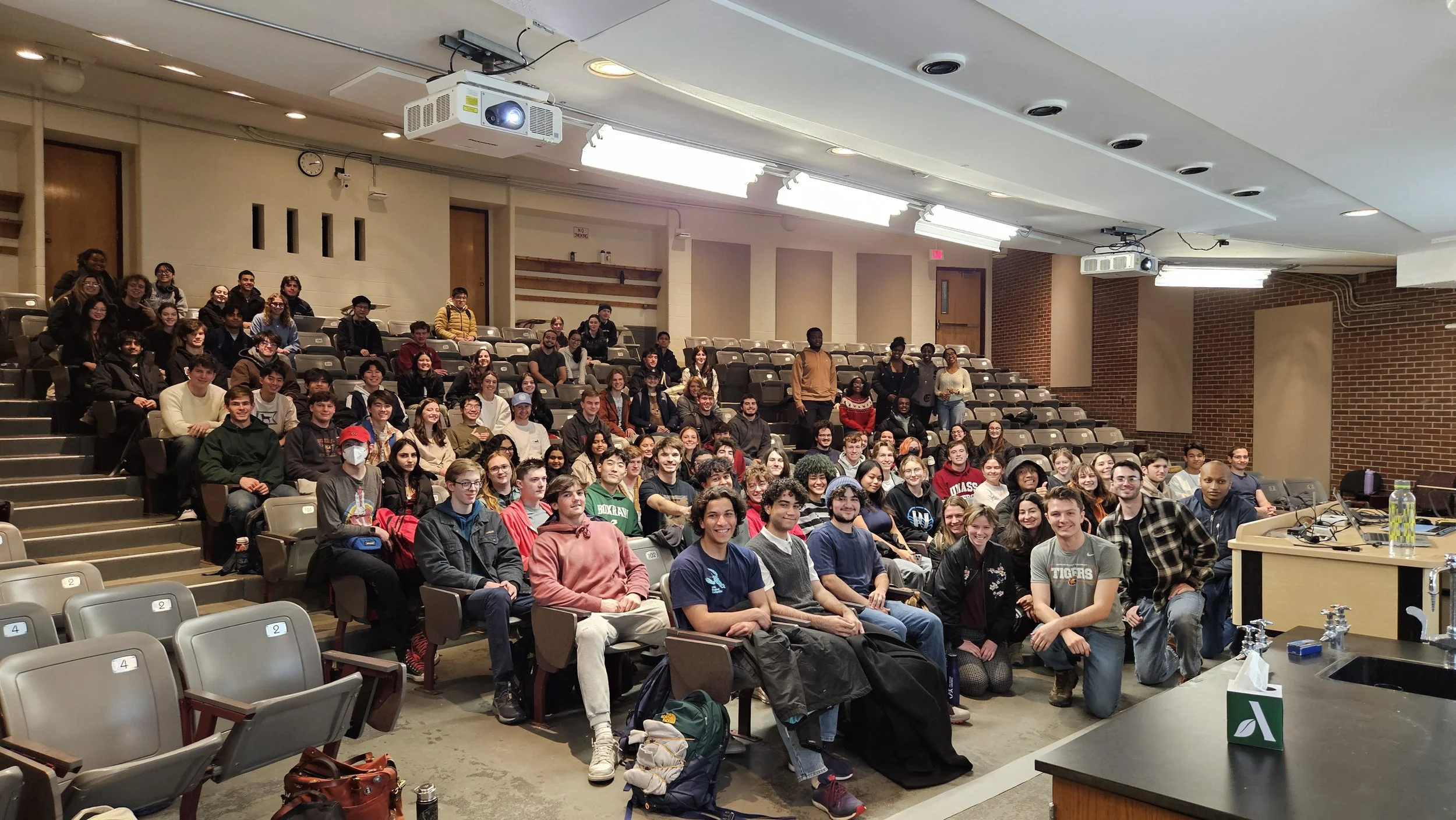
I’m a Physics PhD candidate with over 10 years of experience in college physics education, including teaching Physics 1 and 2 to over 700 students at UMass and RPI, many of which were on life science and pre-med tracks. I designed this program specifically around what students in these majors need (and what they don’t need) from this class.
My teaching centers on conceptual understandings and the “WHY” behind every step of a problem. Understanding the purpose of a group of steps helps us stay oriented towards the finish line and ensures every new lesson and step automatically slots itself in as part of a bigger picture. My approach to teaching the “why” combines careful word choice, tailored analogies to prior knowledge, and working through curated example problems to diagnose and fix misconceptions and instill lasting understanding. All of these methods and principles have been developed, tested, and refined by feedback from hundreds of students.
-
Identify the conceptual, mathematical, and problem-solving gaps holding the student back.
-
Strengthen the underlying principles and mathematical tools that physics depends on.
-
Learn how to translate unfamiliar situations into physical models and solve them systematically.
-
Build the speed, accuracy, and independence needed to perform under real exam conditions.
-
Carry those skills into college physics, quantitative STEM coursework, and eventually medicine or life science.
Our Roadmap
This program is designed to give motivated students a leg-up in a subject that is often passed over.
My former students now work in microbiology research labs, in aeronautical process engineering, in machine learning, and in physics classrooms of their own.
What they tell me is consistent: the analytical habits they built in physics are what got them there — and they still use them every day.
I strive to share a genuine understanding of physics to every student, but this requires a lot of contact time and spots are limited. If this program sounds like something you’re interested in, I’d love to meet with you face-to-face over a video call and learn more about your goals and prior experiences in physics and math, and see if you’d be a good fit for the program. To get started, please fill out the application below. There is no commitment, and it provides a good opportunity to feel out the program on a more personal level, while also optionally getting some concrete physics tips to take into the start of the year.
Please note: This year’s program will begin on September 1, 2026. While students can still enroll after this time, space is limited to ~50 students nationwide so that every student receives meaningful individualized attention.